Remembering Loved Ones: Christian Traditions of Hope
A familiar recipe, an empty chair, or a walk through fallen leaves can bring someone you love sharply to mind. As late October approaches November, some churches prepare special observances of remembrance. Others remember those who have died through different calendars or through pastoral care throughout the year. Christian hope does not erase grief, and Christian traditions do not all explain prayer for the departed in the same way. Knowing those differences can help you find a fitting way to remember.
Choose a form of remembrance that respects your beliefs and your grief. Ask a church about its actual practice before assuming that a familiar service name means the same thing everywhere.
Your quick checklist
- Confirm remembrance service dates directly with the congregation.
- Ask whether names may be submitted and how they will be used.
- Choose whether to attend with someone or keep your remembrance private.
- Offer practical companionship to someone grieving after the special date has passed.
Why remembrance comes into focus in autumn
In the Roman Catholic calendar, All Saints on November 1 and All Souls on November 2 bring distinct observances close together. All Saints honors the saints, while All Souls is particularly associated with prayer for the faithful departed. These dates are not a universal schedule for every Christian church.
Other churches use different calendars or interpret remembrance differently. Orthodox memorial services and appointed memorial Saturdays belong to their own liturgical pattern. A neighborhood church may also offer a pastoral gathering outside any fixed feast. Confirm the year, time, location, and purpose of the service you hope to attend.
Make room for grief alongside hope
Christian teaching about resurrection gives many mourners a language of hope. That does not mean a bereaved person must appear peaceful, explain the loss, or feel better by a particular date. A service may bring comfort and tears at the same time. You can leave quietly, sit near an exit, or ask someone to accompany you.
If you are supporting a friend, use their loved one’s name when welcome and listen without trying to resolve the sadness. A simple offer of a meal, a lift, or a walk can be more useful than an explanation. Ask what would help this week and follow through on the answer.
Understand the differences in belief
Praying for someone who has died, thanking God for their life, and praying for those who mourn are related but distinct actions. Some churches practice all three; others focus on thanksgiving and support for the living. Do not assume a shared belief about what prayer can do for the departed.
Seventh-day Adventist teaching, for example, describes death as an unconscious state while awaiting resurrection. Orthodox and Catholic traditions include prayer for the departed. These differences deserve clear explanation rather than language suggesting that every Christian has the same understanding of life after death.
Source: Seventh-day Adventist Church: death and the afterlife.
Choose a personal way to remember
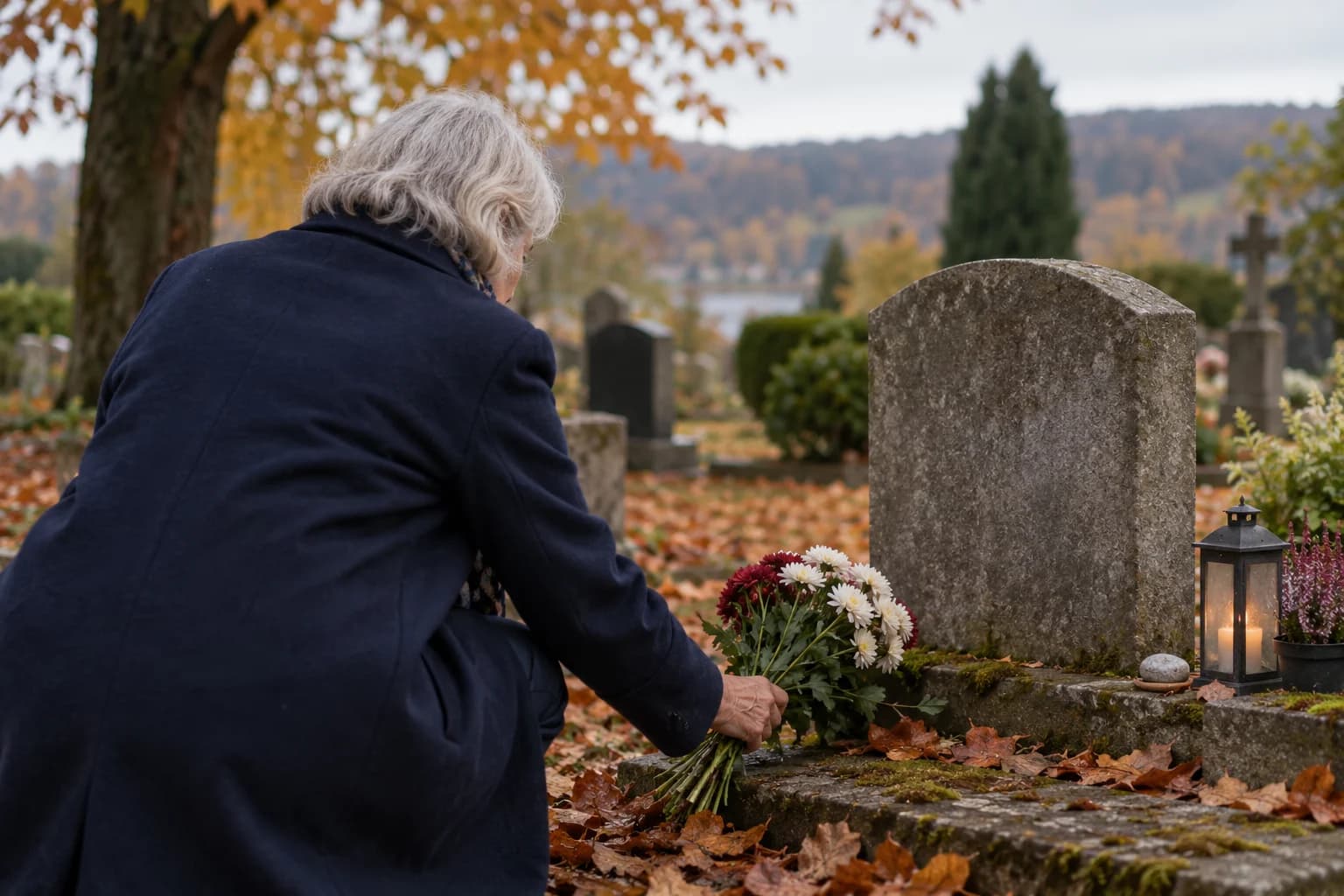
You might prepare a loved one’s favorite meal, write down a story, look through photographs with permission, or support a cause they cared about. Visiting a grave can be meaningful, but it is not the only way to remember. Distance, mobility, family circumstances, and private preference all matter.
Invite children to ask questions using plain language suited to their age. Avoid requiring them to attend a service, touch a memorial, or share a memory publicly. Let family members choose different ways to participate; a quiet afternoon may be as appropriate as a larger gathering.
Before visiting a remembrance service
Ask whether the gathering includes Communion, the reading of names, candles, silence, or a visit to a cemetery. Find out whether visitors may submit a name, whether consent is needed, and whether the service will be streamed or photographed. You should be able to make an informed choice about public remembrance.
For Orthodox services, ask the priest about the parish’s arrangements for commemoration rather than assuming that every name can be included in every liturgical context. The Orthodox Church in America describes several forms of prayer for the departed, including memorial services and appointed memorial days.
Source: Orthodox Church in America: prayers for the departed.
Keep caring after the calendar moves on
The week after a remembrance event can feel especially quiet. Put a reminder in your own calendar to check in, offer practical help, or remember an anniversary if the person welcomes that. Avoid treating attendance at one service as the end of someone’s grief.
NearMeChurch can help you locate a congregation to contact about pastoral support or a remembrance gathering. Ask whether support is available to people who are not members. Explain only as much as you wish; requesting a conversation does not require sharing the whole story with a public audience.
By denomination
These notes cover the ten traditions in our denomination guide. They combine background with practical questions to ask. A source from one church body does not speak for every church in its wider tradition; confirm local arrangements with your congregation.
Orthodox Christianity
Orthodox Christianity includes prayer for the departed within its liturgical life, with memorial services and appointed memorial Saturdays. Speak to the priest about names, dates, and local customs. Do not assume that the Western November observances determine the Orthodox parish’s calendar.
Catholic Christianity
Catholic Christianity distinguishes All Saints from All Souls and includes prayer for the faithful departed. A parish may invite names for remembrance or arrange cemetery prayers. Ask about its specific plans, and remember that local schedules and Eastern Catholic practices may differ.
Baptist Churches
Baptist churches commonly support mourners through Scripture, prayer, funerals, and personal care, while local beliefs and practices should be checked directly. Ask whether a gathering gives thanks for lives remembered, supports bereaved families, or includes another purpose. Do not assume prayer for the departed.
Pentecostal Churches
Pentecostal congregations may offer prayer, pastoral visits, music, and practical support after a death. Ask the pastor how this church understands resurrection and remembrance. A moving testimony or lively worship style does not mean mourners should feel obliged to speak or show a particular emotion.
Lutheran Churches
Lutheran churches may remember departed Christians during All Saints observances, emphasizing God’s promises and the hope of resurrection. Customs vary by church body and parish. Ask whether names are read and how the congregation explains the remembrance rather than assuming a shared practice of prayer for the dead.
Methodist and Wesleyan Churches
Some Methodist congregations use All Saints as an occasion to remember Christians who have died. Ask about this congregation’s service and whether visitors can submit names. Wesleyan communities vary, and a United Methodist custom should not be presented as a rule for every Methodist church.
Presbyterian and Reformed Churches
Presbyterian and Reformed churches often frame remembrance through Scripture, thanksgiving for a life, and care for mourners. Ask the congregation about its teaching and any seasonal service. Do not presume that it shares Catholic or Orthodox understandings of prayer for the departed.
Anglican and Episcopal Churches
Anglican and Episcopal communities may mark All Saints and, in some parishes, All Souls or a commemoration of the faithful departed. Liturgical and theological emphases vary. Check the parish’s own explanation, whether names are included, and what visitors may expect during the service.
Seventh-day Adventist Churches
Seventh-day Adventists understand death as an unconscious state awaiting resurrection. Remembrance should reflect that belief rather than suggest contact with the deceased. Ask the local church about pastoral support, a memorial gathering, and its Saturday worship schedule if you plan a visit.
Nondenominational and Independent Churches
Nondenominational and independent churches have no single remembrance calendar or uniform teaching beyond what a particular congregation states. Read its beliefs about death and resurrection and ask the pastor about pastoral care. A church may welcome a personal conversation even without offering an autumn memorial service.
Prepared by NearMeChurch with AI assistance. Linked church sources explain specific practices; local arrangements can change. Suggest a correction.