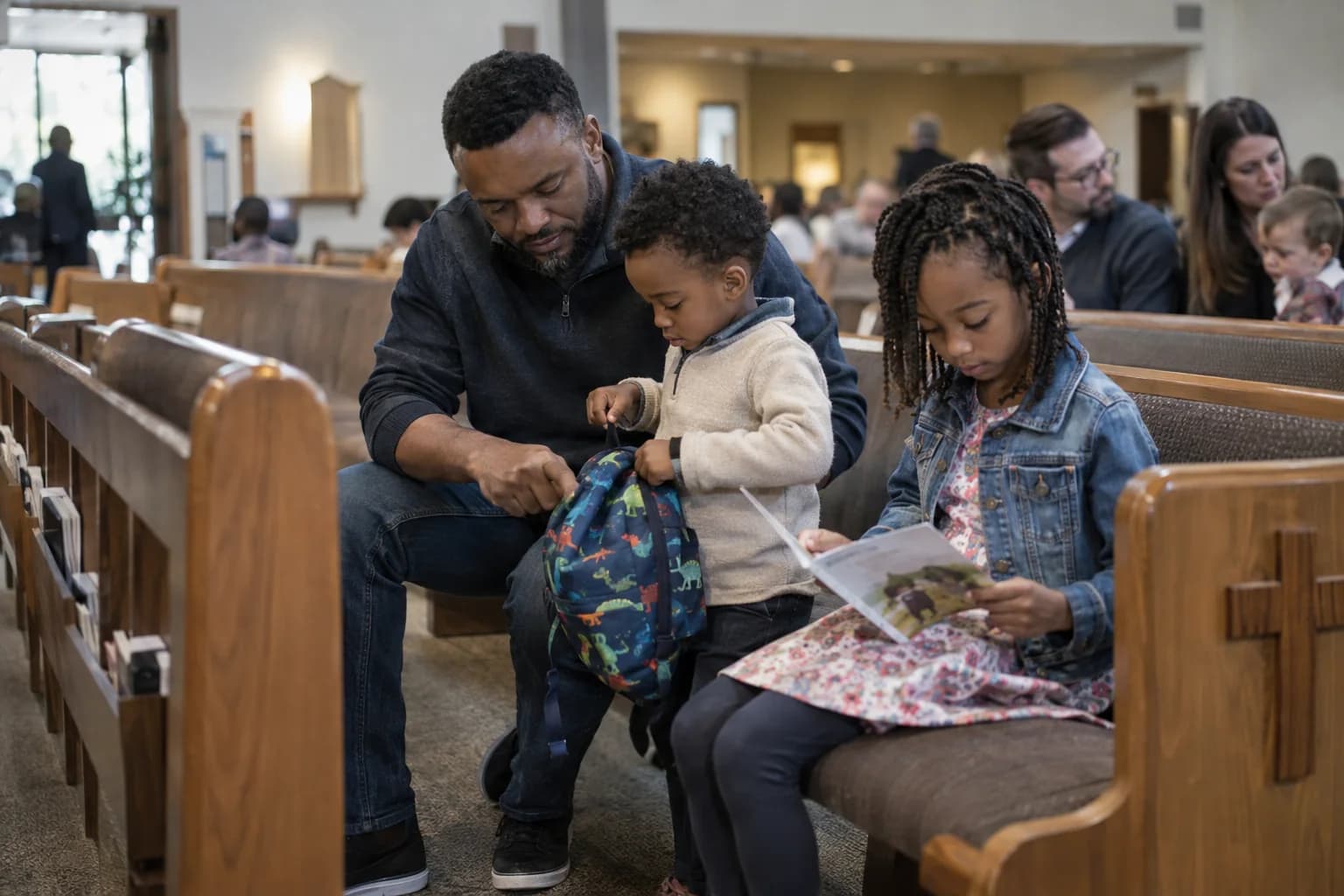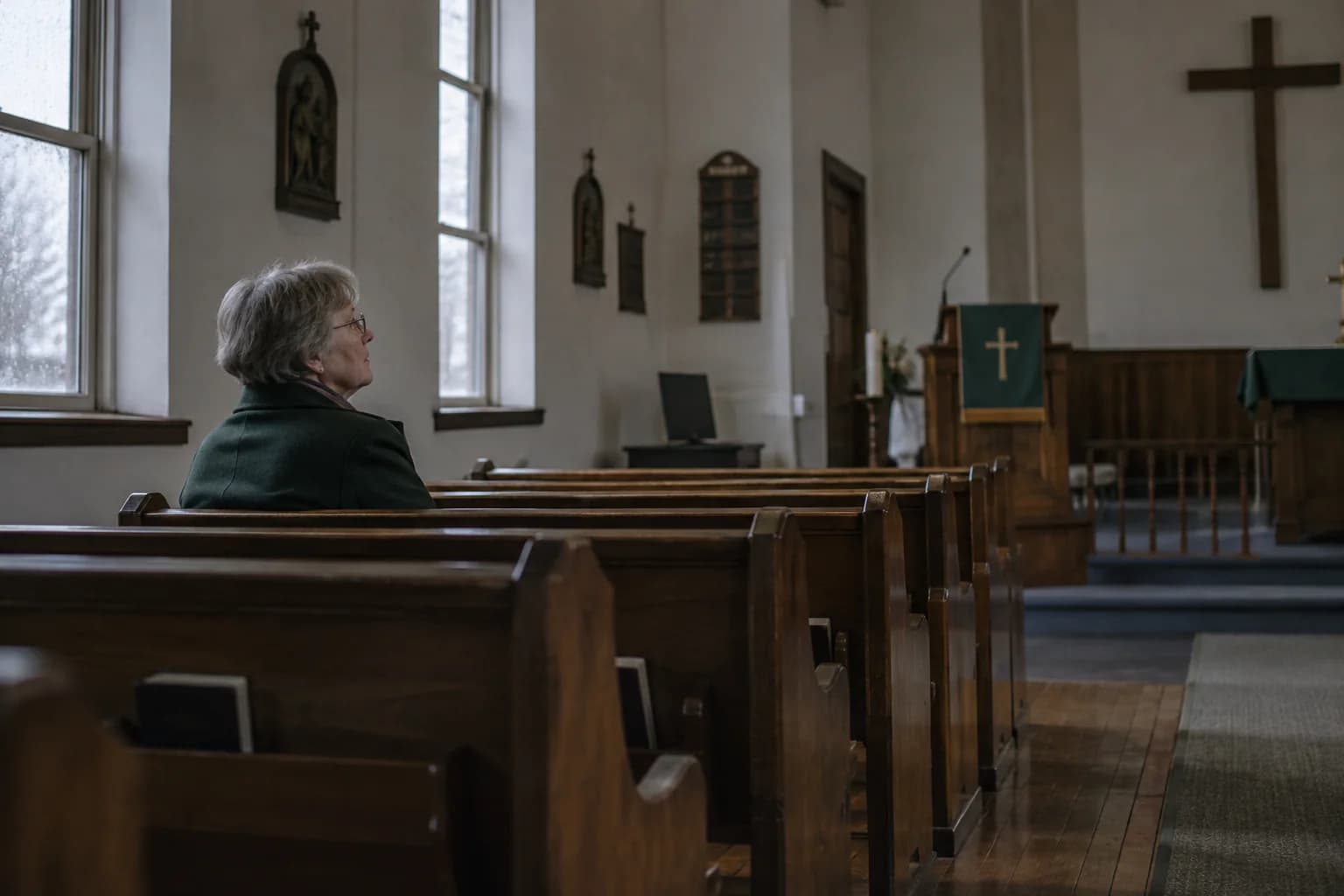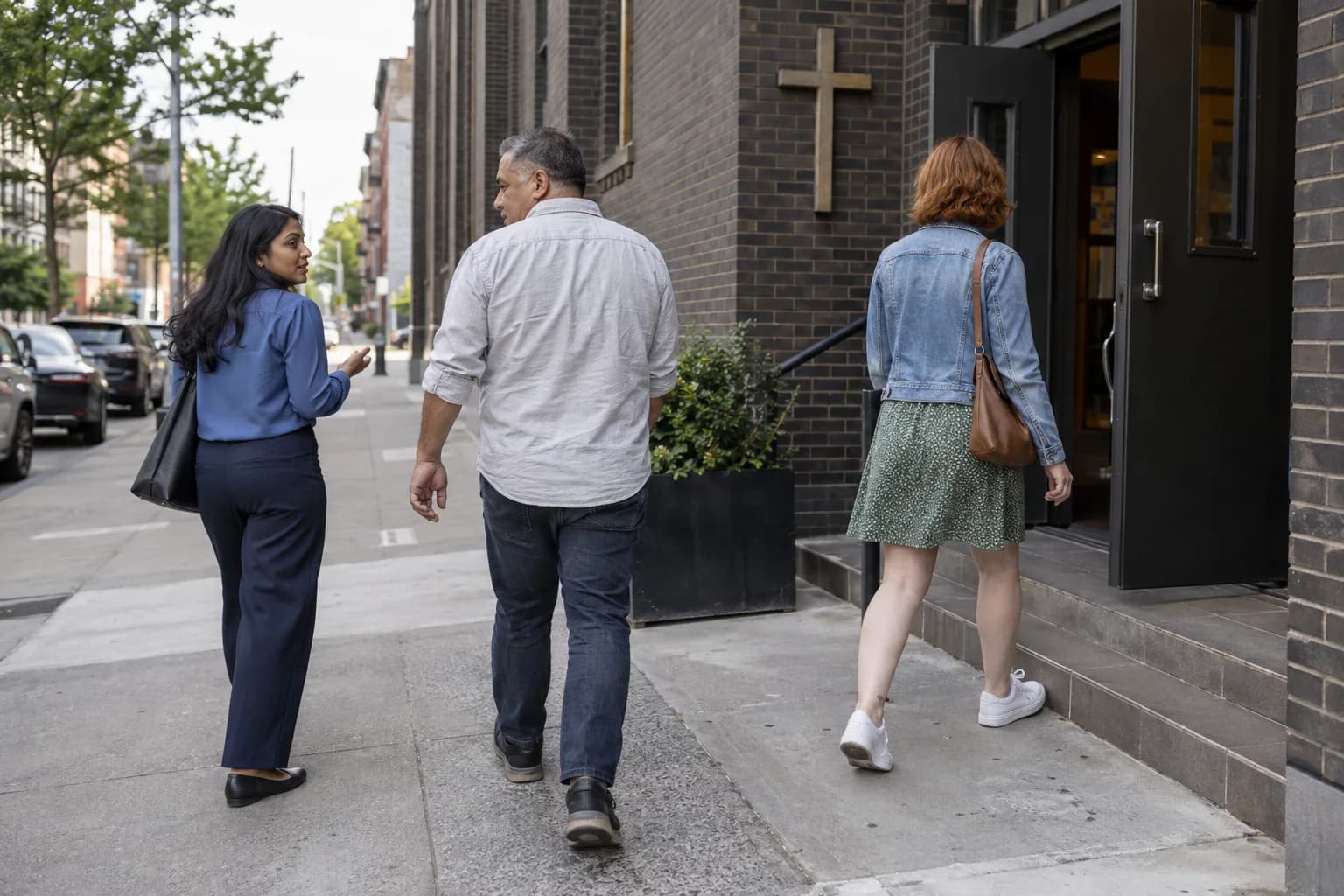
Your First Church Visit: What to Expect
Walking into an unfamiliar church can feel like arriving somewhere everyone else knows the routine. You do not need to learn everything in advance. A few practical checks can help you spend less time wondering what to do and more time taking in the experience.
Choose a service, confirm the details, and give yourself permission to observe. A first visit is a chance to learn, not a test of how well you know the customs.
Your quick checklist
- Confirm the service time and which building or entrance to use.
- Check parking, transport, accessibility, and any arrangements for children.
- Aim to arrive about 10–15 minutes early if that works for you.
- Ask a greeter for help with seating or following the service.
Before you go
Start with the church’s own website or contact details. A directory can help you find a congregation, but holiday schedules, special events, and service locations can change. Check the specific date you plan to attend rather than relying on an old photograph of a bulletin.
If a church lists several services, ask how they differ. They may use different languages or styles of music, or have different arrangements for children. If step-free access, a hearing loop, or a quieter space matters to you, ask about that particular building and service.
Arriving and finding a seat
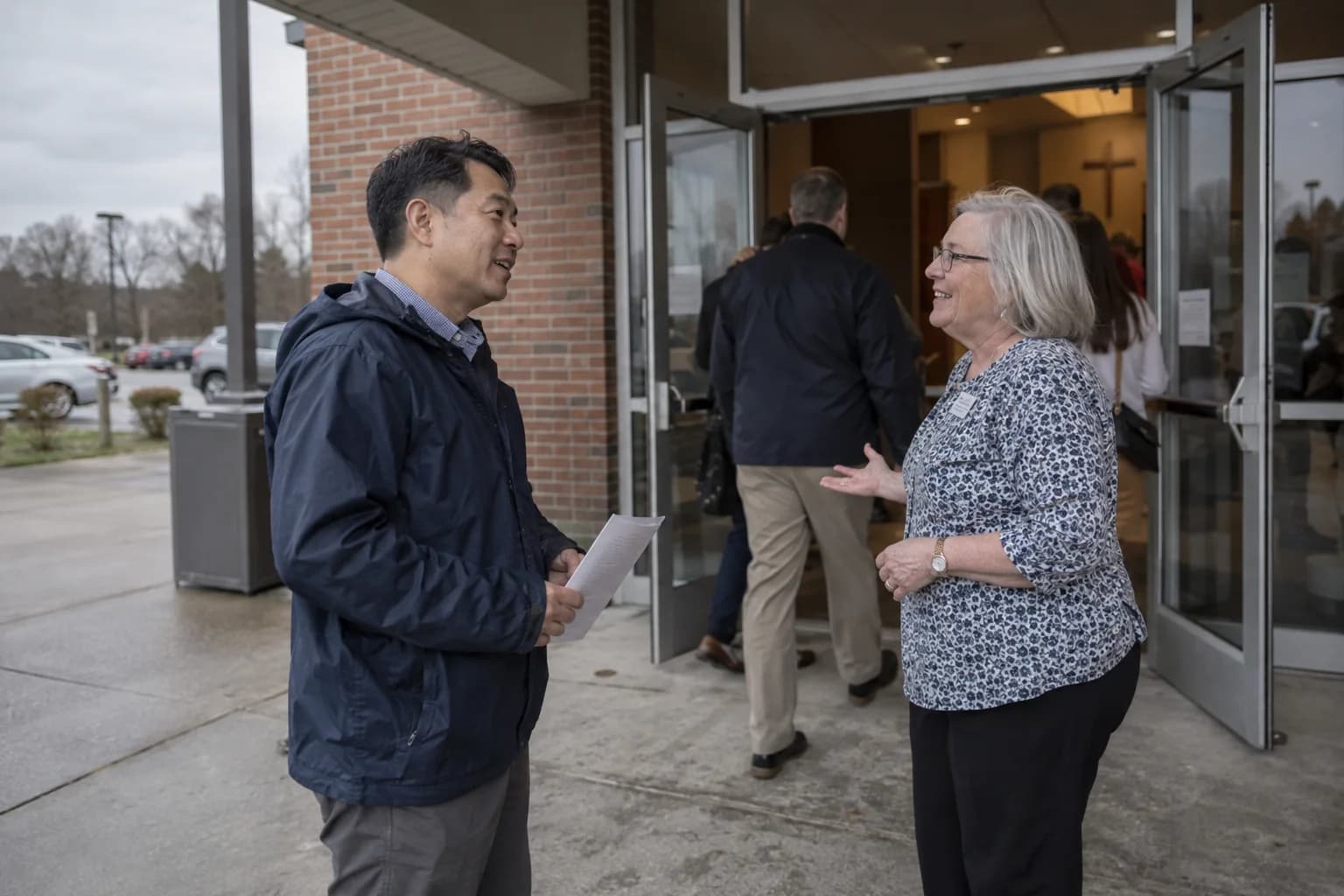
Leave a little room in your plans for finding the entrance and getting settled. You can say, “This is my first visit. Is there anything I should know?” That gives a greeter a clear, simple way to help.
Ask whether any seats are reserved. An aisle seat can make it easier to step out if you need to, while sitting where you can see the service leader may make an unfamiliar service easier to follow. There is no need to choose the perfect spot.
Following the service
You may encounter singing, prayers, Bible readings, a sermon or homily, and Communion. Their order and the amount of spoken participation vary. A printed order of service, a book, or a screen may provide words and directions.
It is fine to listen when you do not know a song or response. If standing or kneeling is uncomfortable or not possible for you, remain seated. You can ask an usher for help without explaining personal medical details.
When Communion is offered
Do not assume that everyone attending is invited to receive Communion. Eligibility differs between churches. At a Catholic Mass, for example, non-Christians are welcomed to attend but are not admitted to Holy Communion, and most other Christians are ordinarily not admitted either.
If you are unsure, ask before the service or remain in your place during distribution. A visit can be meaningful without taking part in every ritual.
Source: USCCB: guidelines for receiving Communion at a Catholic Mass.
Introductions, collections, and contact cards
A collection or offering may take place. You can let it pass without contributing. If you want to donate, check the church’s official instructions rather than feeling that you must decide in the moment.
You can also choose whether to complete a visitor card or join a conversation afterward. A useful introduction is simply, “I’m visiting today and wanted to see what the service is like.” Share the contact information you are comfortable sharing.
After the service
If you have time, ask one or two questions you genuinely care about: Is this the usual service format? Is there a group for newcomers? Who could explain something from the service? You do not need to settle every question in one conversation.
Later, reflect on whether you could follow what was happening, ask questions, and participate at your own pace. If you return, familiarity may make the next visit easier. If you choose another congregation, you can use what you learned to plan that visit.
By denomination
These notes cover the ten traditions in our denomination guide. They combine background with practical questions to ask. A source from one church body does not speak for every church in its wider tradition; confirm local arrangements with your congregation.
Orthodox Christianity
The Divine Liturgy is central to Orthodox Sunday worship. Visitors can observe, while Communion is reserved for Orthodox Christians prepared to receive it. Ask the parish about the service language, how to follow along, and where to sit if standing is difficult.
Catholic Christianity
In the Roman Rite, Mass includes the Liturgy of the Word and the Liturgy of the Eucharist, with opening and concluding rites. Ask for a service aid. Eastern Catholic liturgies differ, so check the parish’s rite as well as its language.
Baptist Churches
Check the local congregation’s service description and visitor guidance. Southern Baptist congregations determine their own membership and Lord’s Supper practices; that source does not speak for every Baptist body. Ask how this church’s service is organized and whether Communion is scheduled.
Pentecostal Churches
Some Pentecostal worship includes raised hands and spoken expressions of praise, as described by the Assemblies of God. You can observe without copying those actions. Ask about the service length, music volume, and whether individual prayer is offered.
Lutheran Churches
Lutheran services may use a printed liturgy, hymnal, or screen. The ELCA describes worship as centered on word and sacrament. Ask this congregation how to follow the service and about Communion eligibility; different Lutheran church bodies do not all apply the same practice.
Methodist and Wesleyan Churches
Ask whether the service is traditional, contemporary, or another local format, and whether the church offers guidance for newcomers. United Methodist visitor advice is one useful example, but it should not be treated as a rule for every Methodist or Wesleyan church.
Presbyterian and Reformed Churches
The PC(USA) describes worship in movements of gathering, Word, Eucharist, and sending. A local service may use different labels or celebrate Communion less frequently. Ask for the order of worship and check the practices of the particular Presbyterian or Reformed body.
Anglican and Episcopal Churches
Episcopal worship draws on common prayer, with readings, prayers, preaching, and often the Eucharist. Ask whether the listed service is Holy Eucharist, Morning Prayer, or another form. Anglican churches outside the Episcopal Church may use different books and customs.
Seventh-day Adventist Churches
Plan for Saturday rather than assuming Sunday. Sabbath School and the main worship service can have separate start times. Confirm both and decide which you want to attend; the denomination describes Sabbath School as a setting for Bible study.
Seventh-day Adventist Church: Sabbath worship and Sabbath School
Nondenominational and Independent Churches
The name alone does not tell you the church’s worship style or beliefs. Read its visitor page and statement of faith, then ask about the service format, length, and Communion practice. Use that congregation’s own explanation rather than expecting a uniform independent-church routine.
Prepared by NearMeChurch with AI assistance. Linked church sources explain specific practices; local arrangements can change. Suggest a correction.