The Last Person With a Key
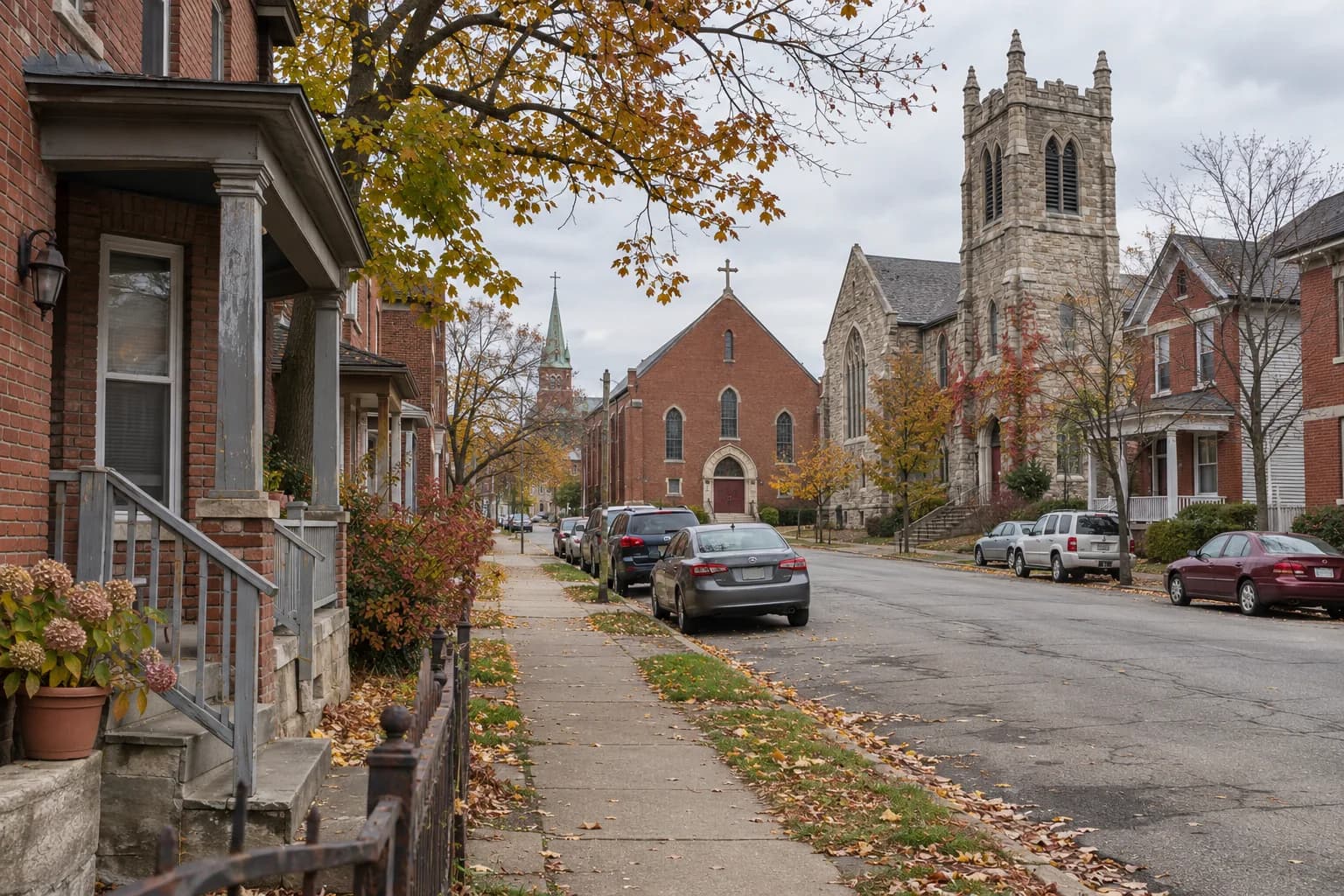
A key is a small thing to carry until it opens a building full of other people’s memories. When a church closes, attention often goes to the final hymn or the future sale. Less visible is the person who must return afterward: to check a window, answer a question, or decide who should receive the spare key. This is a reflection on that responsibility, informed by published heritage guidance rather than an invented caretaker’s story.

A church closure deserves more than a photograph of a locked door. Ask what happens to its people, its records, and the ordinary work that kept it open.
Your quick checklist
- Confirm whether the congregation is closing, merging, moving, or only leaving its building.
- Ask who is responsible for records, objects, and public enquiries.
- Offer practical help without pressuring volunteers to share private memories.
- Check where community activities will continue before directing people elsewhere.
The day after the final hymn
The public ending is easy to recognize: an announced date, a gathering, a closing service. The private ending is harder to schedule. A volunteer may still know which door sticks in wet weather, where an old register belongs, or whom to call when the heating fails. Those details can outlast the weekly congregation. They deserve an orderly handover rather than an assumption that someone will keep managing them indefinitely.
The title’s last keyholder is a lens, not a claim that every church has one solitary caretaker. In practice, responsibility may sit with trustees, a parish team, denominational officers, or a new owner. The useful question is who will hold each responsibility next. A building can be empty while the work surrounding it remains unfinished.
A building’s ending is not always a congregation’s ending
A congregation may move into shared premises, join another community, or continue meeting in a smaller space. A building may remain standing with a different purpose. Treating all of these possibilities as the death of a church misses important distinctions. Ask what has actually changed before writing a farewell or telling a neighbor that the church no longer exists.
Historic England’s guidance treats closure and reuse as matters requiring an understanding of the building and its community context. That is a useful English heritage perspective, not a universal procedure. The local decision belongs within the relevant church, ownership, and planning arrangements. A directory entry alone cannot explain the full story.
The objects too ordinary to become exhibits
A commemorative window announces its significance. A cupboard of mugs does not. Yet a handwritten recipe, a repaired banner, or a photograph of a volunteer team can reveal how people actually used a place. Their value comes from context. Without a name, date, and explanation, an object that matters deeply to one generation can become an unexplained box for the next.
Methodist Heritage in Britain recommends inventories, photographs, recorded memories, and appropriate archival care when churches close. Its advice offers one concrete example of preservation work. Before donating, publishing, or taking anything home, ask the people authorized to decide. Personal information and ownership do not become public simply because a building is closing.
Not every memory will be affectionate
Farewells often produce a single warm account of a complicated place. Some people remember friendship; others remember exclusion, conflict, or an exhausting burden of responsibility. An honest record can accommodate disagreement without turning a closing service into a public argument. Invite contributions, explain where they will be kept, and let people decline.
Ask open questions: What did you do here? What changed? What do you hope someone remembers? Avoid supplying the emotion in advance. A person who seems relieved may have served faithfully for decades. A person who never attended may still care about the building. Neither response needs to fit a story of uncomplicated loss.
Help that actually lightens the load
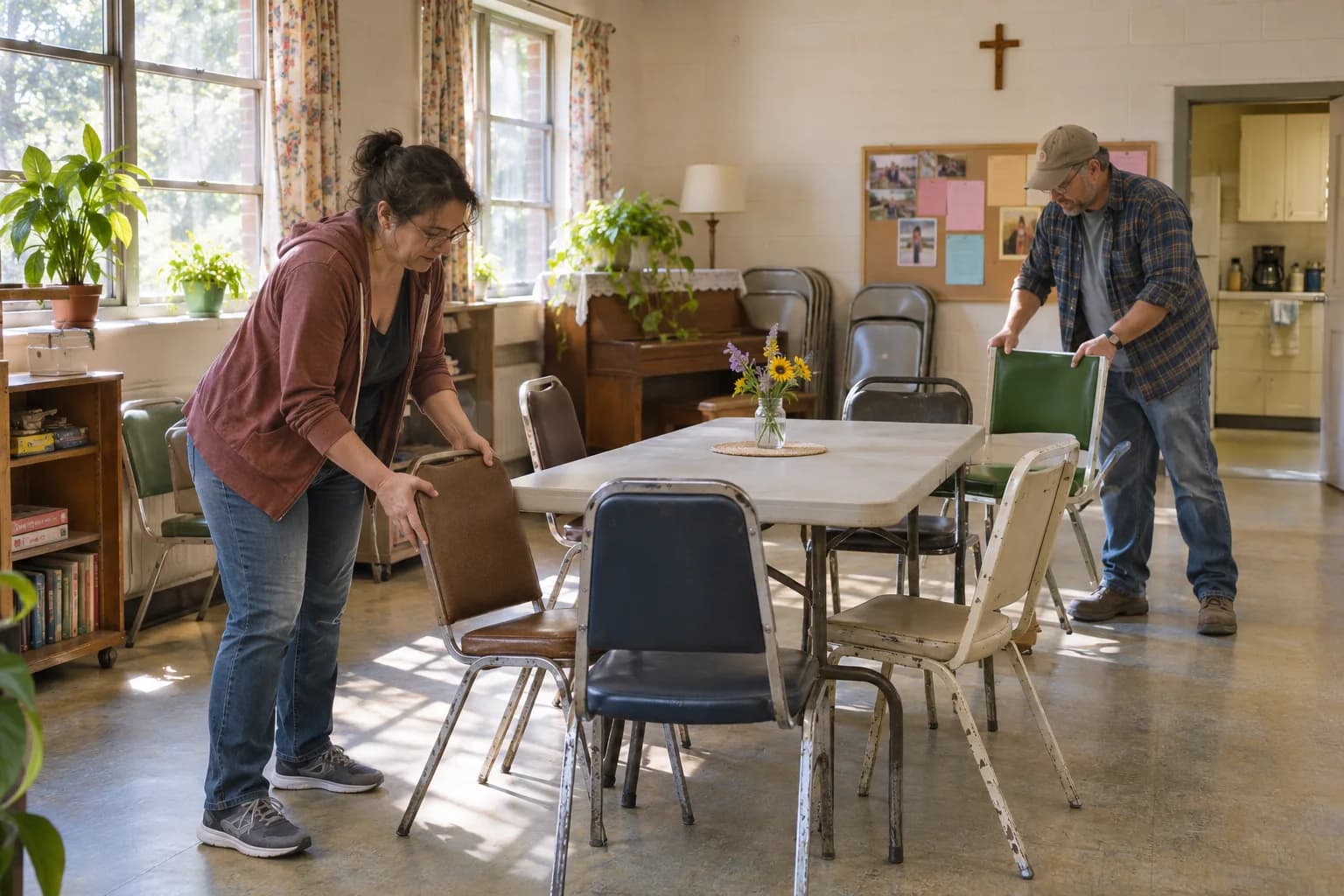
If you want to help, offer a bounded task: identify people in a photograph, scan material with permission, or help prepare a clearly labeled handover list. Ask what is useful before organizing a collection. An unsolicited delivery of memorabilia can become another responsibility for the very person you hoped to support.
The handover should also include the people who used the premises without attending worship. Where will their group meet? Who will explain the change? What information can be shared publicly? The last useful act may be less dramatic than locking the door: making sure someone who arrives next Tuesday knows where to go.
What the key really holds
The key is an appealing symbol because it makes responsibility visible. But preservation is not achieved by keeping one person permanently on call. A thoughtful ending distributes work, records decisions, and allows volunteers to stop. Gratitude should include permission to put the key down.
If a nearby listing appears closed, use NearMeChurch as a starting point and confirm the situation directly. Look for the continuing congregation as well as the old address. A building’s history can remain important while the living community begins another chapter elsewhere.
By denomination
These notes cover the ten traditions in our denomination guide. They combine background with practical questions to ask. A source from one church body does not speak for every church in its wider tradition; confirm local arrangements with your congregation.
Orthodox Christianity
Ask the parish and its diocesan authority how sacred items, icons, and parish records will be cared for. Do not assume that a building sale means the community or its liturgical life has ended.
Catholic Christianity
Ask the parish or diocese where worship and sacramental records will move. A former parish building and a continuing Catholic community are different things; confirm both before updating a listing.
Baptist Churches
Ask how this congregation makes property and closure decisions. Baptist affiliations and governing documents differ; the person with the keys may not have authority to dispose of the building or its contents.
Pentecostal Churches
Ask whether the congregation is moving or ending, especially where it rents its premises. Instruments, recordings, and the history of prayer meetings may matter alongside the building’s physical features.
Lutheran Churches
Ask the congregation and its church body about archives, furnishings, and a possible merger. Different Lutheran bodies have different arrangements; preserve the local story rather than assuming one procedure.
Methodist and Wesleyan Churches
British Methodist Heritage offers specific preservation guidance, but it is not a worldwide Wesleyan rulebook. Ask the relevant church body about records, objects, and who will complete the handover.
Presbyterian and Reformed Churches
Ask the session, elders, presbytery, or other responsible body which decisions apply locally. Ownership and archival arrangements vary across Presbyterian and Reformed churches and countries.
Anglican and Episcopal Churches
Church of England closure guidance applies to a particular national setting. Other Anglican and Episcopal churches have their own arrangements; ask the diocese which records and responsibilities will transfer.
Seventh-day Adventist Churches
Ask the congregation and its conference where Sabbath gatherings and community activities will continue. Confirm the destination of records and resources rather than treating the old address as the whole church.
Nondenominational and Independent Churches
Ask who legally holds the property and records and who can authorize changes. Independent churches have no single shared closure process; a clear contact and handover matter particularly when leadership changes.
Prepared by NearMeChurch with AI assistance. Linked church sources explain specific practices; local arrangements can change. Suggest a correction.