If This Church Disappeared Tomorrow, Who Would Miss It?
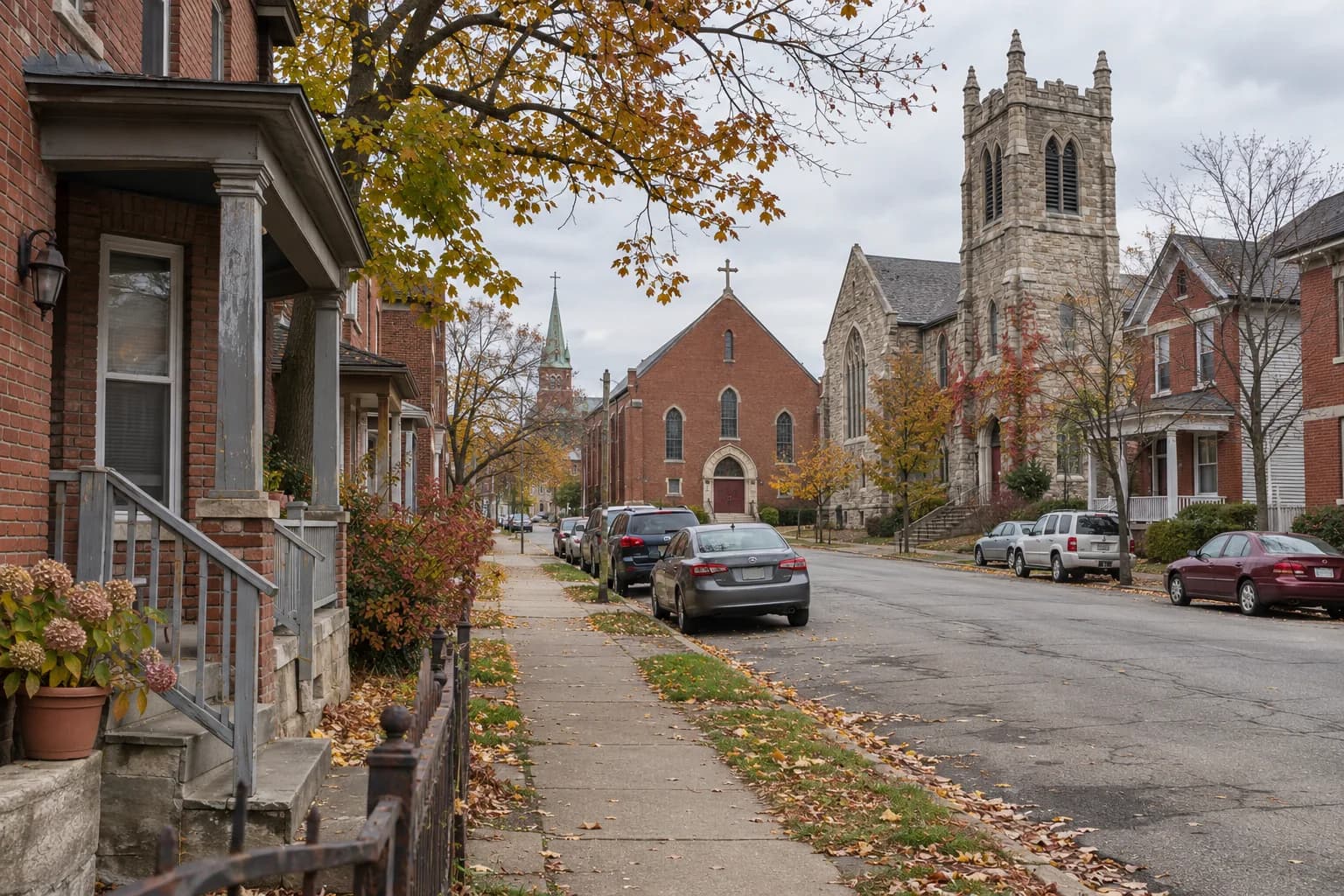
Imagine the church at the corner gone by next week. The first answer might be obvious: its congregation would miss it. The more revealing answers may come from the rehearsal group, the neighbor who uses its garden, or the person who barely notices it. This is a thought experiment, not news of an announced closure. Its purpose is to ask what the building actually contributes—and whose experience is missing from the usual account.
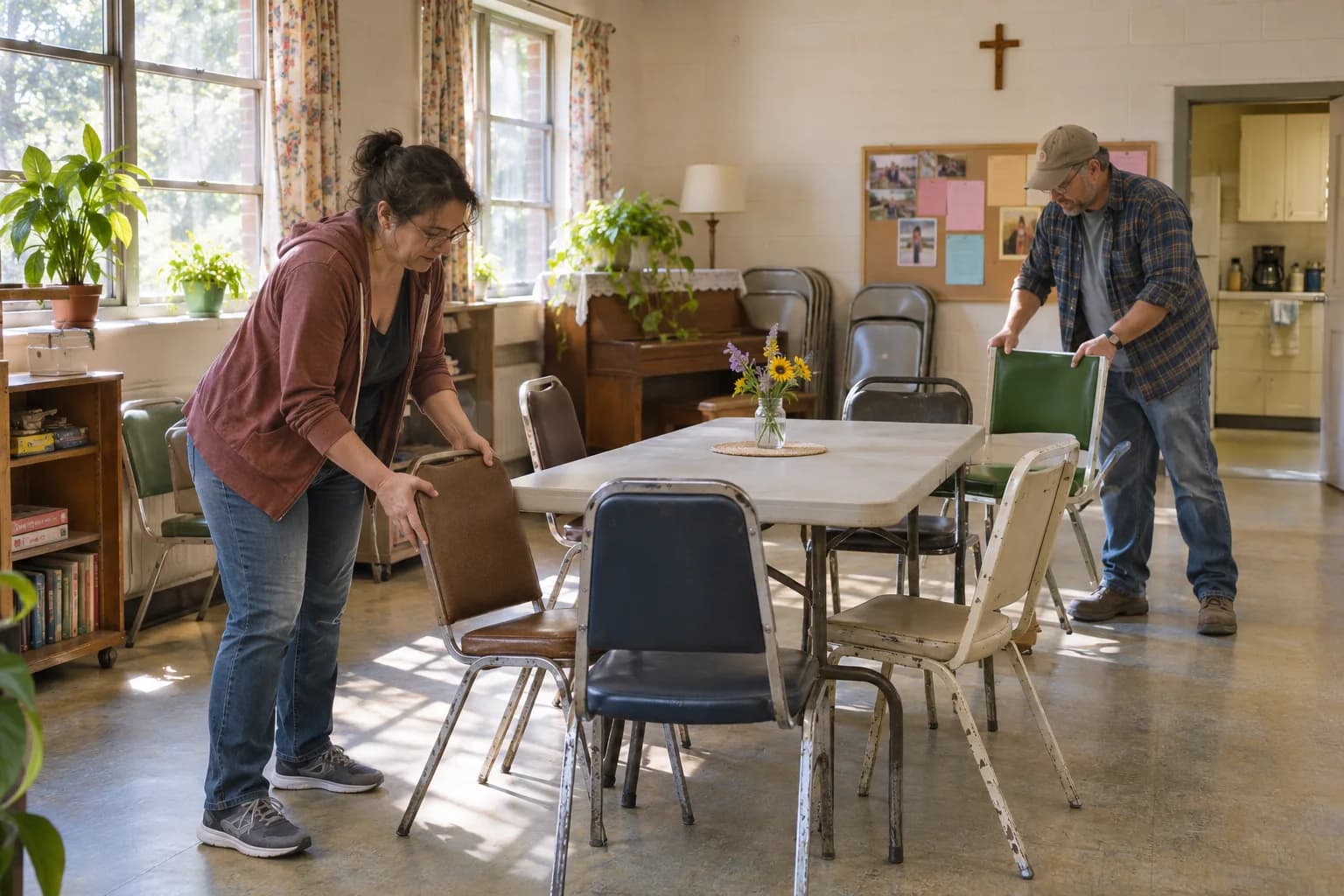
A church’s neighborhood value is something to investigate with its neighbors, including people who feel no connection to it. Attendance alone cannot answer the question.
Your quick checklist
- List verified activities across an ordinary week, including outside groups.
- Ask users and nearby non-users what would change if the space vanished.
- Distinguish the loss of a building from the loss of an activity or congregation.
- Include criticism and indifference alongside appreciation.
Start on a weekday
Sunday attendance is a visible measure because people arrive together. Weekday use can be scattered across rooms and hours: an appointment, a rehearsal, a volunteer shift. To understand a building’s role, begin with a timetable and ask who actually uses each space. A listed activity is a lead to verify, not proof that it still runs.
The National Churches Trust’s House of Good research examines the social contribution of UK church buildings, including support beyond worship. It gives a reason to look beyond the service count. It does not prove that any particular church offers those benefits, and a UK-wide research finding should not be presented as a measurement of an individual American congregation.
Three different things can disappear
The building, the congregation, and the activities are connected, but they are not identical. A group might relocate while preserving its friendships. A congregation might move while a hall remains in community use. A building might stand untouched while the affordable activities inside it stop. Ask which kind of disappearance you are imagining.
This distinction changes the questions. Can another venue fit the activity? Is it reachable by the people who use it? Would the rent change? Would the same volunteers continue? A replacement room is not automatically a replacement community, but it may still be a workable solution. Investigate rather than assuming that relocation is either effortless or impossible.
Ask the people who never attend
The next-door resident may describe bells, traffic, shade, or a familiar landmark. A shopkeeper may notice footfall. Someone else may say the church has no effect on their life. These are possible answers, not interviews conducted for this article. A real local account should ask people directly and preserve the range of responses.
Useful questions are concrete: Have you used the building? Do you know what happens there? Would anything become harder if it closed? Avoid asking people to endorse the church’s importance. Someone who feels unwelcome may identify a gap that loyal users never see. Their answer belongs in the picture too.
Count what you can, carefully
A weekly attendance figure cannot show every relationship, but an impressive total can mislead too. If one person attends three groups, are you counting one person or three visits? If volunteers work unpaid, what does an estimated value describe? State the method, the period, and what remains unknown.
Use a modest local inventory before reaching for a grand monetary claim. Record confirmed room use, opening hours, partnerships, and the people responsible for each activity. Ask users what alternatives they would realistically choose. If you cannot verify a number, leave it out. Specific, limited evidence is more useful than a dramatic estimate with unclear assumptions.
A valued neighbor can still create friction
A church can offer meaningful support and still have problems to address. Noise, inaccessible entrances, confusing notices, or distrust may shape neighbors’ experiences. Asking what would be missed should not become a way to dismiss those concerns. The same building can mean refuge to one person and distance to another.
Nor should usefulness become a requirement for religious belonging. A congregation’s worship matters to its members even where its public activities are small. The neighborhood question adds another perspective; it does not reduce faith to a service-delivery score. Keep spiritual purpose, social contribution, and practical complaints visible without forcing them into one number.
Ask before the answer becomes urgent
The most useful time for this conversation is while people still have choices. An ordinary neighborhood walk, a public timetable, or a listening event can reveal both valued activities and missing connections. Ask permission before recording stories or publishing names. Explain how the information will be used and allow people to decline.
Choose a nearby church through NearMeChurch and look beyond its Sunday schedule. Confirm its current activities, notice who can enter, and ask what you still do not know. The answer to who would miss it should emerge from those encounters. It may be moving, mixed, or surprisingly small. Its value lies in being honest.
By denomination
These notes cover the ten traditions in our denomination guide. They combine background with practical questions to ask. A source from one church body does not speak for every church in its wider tradition; confirm local arrangements with your congregation.
Orthodox Christianity
Ask the parish which activities serve members and which are open to neighbors. Liturgical life, cultural continuity, and community support may overlap; let participants explain what each means locally.
Catholic Christianity
Ask separately about parish worship, parish facilities, and any associated charities or schools. Do not attribute every Catholic service in an area to the particular church building under discussion.
Baptist Churches
Ask the congregation and outside room users what actually takes place. A local Baptist church’s community role should be established from its own activities, rather than inferred from a wider Baptist network.
Pentecostal Churches
Ask about both organized activities and informal support, while respecting privacy. Do not turn personal prayer requests or testimony into evidence of impact without the people involved freely agreeing.
Lutheran Churches
Ask which activities belong to this congregation and which are run by a separate agency or partner. Clear attribution makes it easier to understand what would truly change if this building became unavailable.
Methodist and Wesleyan Churches
Ask how the local congregation connects worship, service, and shared premises. Where work is organized across several churches, distinguish the contribution of this address from that of the wider network.
Presbyterian and Reformed Churches
Ask leaders, regular users, and neighbors the same concrete questions. Presbyterian and Reformed congregations vary in public activities; a denominational label cannot establish local reach or accessibility.
Anglican and Episcopal Churches
Ask about the church’s relationship with residents as well as regular worshippers. Parish history or civic prominence does not guarantee present-day access, so check who uses the building now.
Seventh-day Adventist Churches
Include Saturday use and any verified weekday activities in the weekly picture. Distinguish this congregation’s contribution from separate Adventist institutions or programs operating elsewhere.
Nondenominational and Independent Churches
Ask who runs each project and who controls access to the premises. An independent church may host outside organizations; describe partnerships accurately rather than assigning all their work to the congregation.
Prepared by NearMeChurch with AI assistance. Linked church sources explain specific practices; local arrangements can change. Suggest a correction.