Preparing for Advent and Christmas: A Guide Across Christian Traditions
October is a good time to make room for a quieter approach to Christmas. Before calendars fill with concerts, shopping, and travel, consider how you want to pray, gather, and care for others. Many Western churches observe Advent, while Orthodox churches prepare through the Nativity Fast and other communities follow their own patterns. This guide helps you plan without assuming every Christian household keeps the same season.
Choose a few practices that fit your beliefs and circumstances: a short reading, a confirmed service, and one practical act of generosity can give the season a clear purpose.
Your quick checklist
- Check the local church’s calendar rather than assuming every congregation follows the same dates.
- Choose one manageable household prayer or Bible-reading practice.
- Confirm holiday service times, booking requirements, transport, and accessibility.
- Ask a local charity what help it needs before organizing a collection.
Understand what Advent prepares for
Advent looks toward the celebration of Jesus’ birth and the Christian hope of his coming again. In the Roman Catholic calendar and many Western church calendars, the first Sunday of Advent in 2026 is November 29. Its four Sundays provide a rhythm of expectation before Christmas. Some churches use a wreath, seasonal readings, or particular colors; others do not.
An Advent calendar beginning December 1 does not establish the liturgical starting date. Nor is Western Advent the universal Christian preparation period. Orthodox communities commonly keep a forty-day Nativity Fast, with civil dates depending on the church calendar followed. Ask your parish for its calendar and pastoral guidance rather than applying another church’s schedule.
Source: USCCB: Advent in 2026.
Build a simple practice at home
Set aside a small, repeatable moment: perhaps after dinner, before the school run, or during a quiet morning. Read a short portion of Luke 1–2 or Matthew 1–2, pause over one question, and offer a brief prayer. Return to a passage more than once if that helps; there is no need to turn reflection into a race through a checklist.
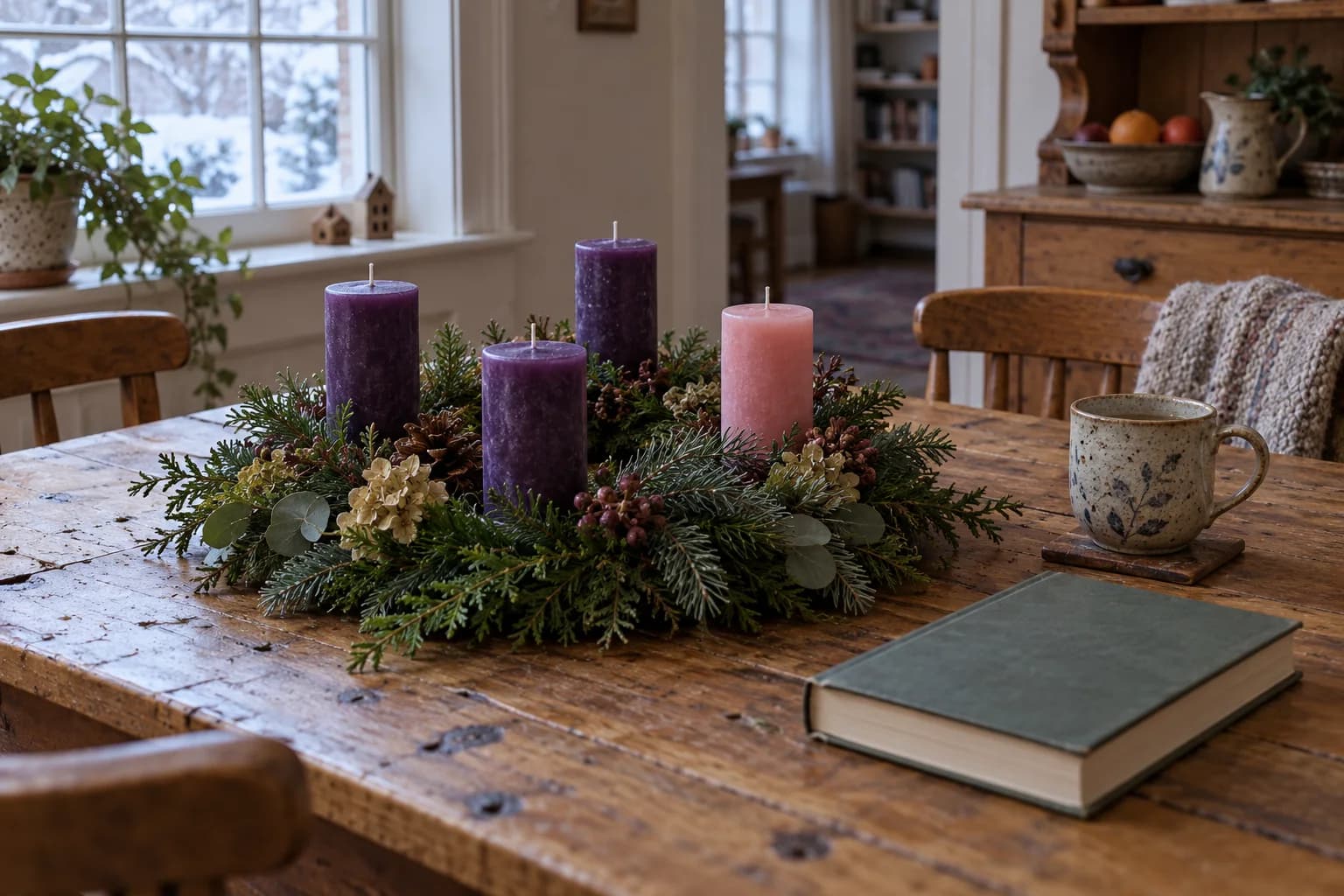
If you use candles, place them safely and consider battery lights around children or where flames are unsuitable. An Advent wreath can support attention, but buying decorations is not a condition of participating. Invite children to ask questions, and give adults living alone a practice that works without an imagined ideal family gathering.
Plan worship before the busy weeks
Look separately for Advent services, carol events, Christmas Eve worship, and Christmas Day services. A concert may have different arrangements from a worship service. Ask whether tickets, advance registration, or an early arrival are needed, and confirm whether childcare and usual accessibility support will be available.
When visiting another tradition, ask about Communion and any unfamiliar customs. A late-night service may be meaningful for one household and impractical for another. Choose a time that respects transport, work, disability, and children’s needs. Check the church’s current announcement before setting out.
Leave room for generosity, grief, and rest
A practical Advent plan can include support for neighbors: a requested pantry donation, an agreed volunteer shift, or a visit that someone actually wants. Ask organizations about current needs and make commitments you can keep after the holiday excitement fades. Give people choice and privacy when offering help.
Christmas can also bring grief, loneliness, or financial pressure. Keep some time unfilled and allow a simpler celebration. If a church offers a quiet or remembrance service, ask what it involves. Hope can be expressed through honest prayer and companionship as well as through festive music and crowded gatherings.
By denomination
These notes cover the ten traditions in our denomination guide. They combine background with practical questions to ask. A source from one church body does not speak for every church in its wider tradition; confirm local arrangements with your congregation.
Orthodox Christianity
Orthodox preparation commonly centers on the forty-day Nativity Fast, with prayer, worship, fasting, and generosity. November 15 is its starting date in the church calendar, but the corresponding civil date varies with calendar usage. Ask your parish for dates and individual pastoral guidance, especially concerning food restrictions and family needs.
Orthodox Church in America: essential beliefs and the Nativity Fast
Catholic Christianity
Catholic parishes observe Advent as preparation for Christmas and Christ’s return. In 2026 the first Sunday is November 29 in the Roman calendar. A parish may offer wreath blessings, reconciliation opportunities, and charitable collections. Eastern Catholic practices can differ. Check which rite and calendar your parish follows.
Baptist Churches
Baptist churches vary in their use of Advent. Some follow four weeks of readings and candle lighting; others prepare through sermons, carol services, or mission giving without a formal liturgical season. Ask what the congregation offers and how visitors can participate. A seasonal custom is not a universal Baptist requirement.
Pentecostal Churches
Pentecostal churches may prepare with prayer gatherings, Christmas preaching, music, and opportunities for practical service. Some use Advent readings or wreaths, while others do not. Ask the local church about its calendar and the format of special events. Avoid assuming a particular program follows from a charismatic worship style.
Lutheran Churches
Lutheran congregations commonly observe Advent through seasonal readings, hymns, and preparation for Christmas. Some offer midweek services or household devotional materials. Wreath customs and local schedules vary. Ask the church how Advent worship differs from its Christmas celebrations and check visitor guidance for Communion at holiday services.
Methodist and Wesleyan Churches
Methodist Advent practice has connections with the Anglican worship inherited by John Wesley. Many congregations mark the season with readings, hymns, candles, and service to neighbors. Other Wesleyan bodies arrange it differently. Ask about local devotional resources and choose a manageable practice rather than trying to attend every advertised event.
Presbyterian and Reformed Churches
Presbyterian and Reformed churches differ in how they observe the church year. Some mark Advent with seasonal preaching, prayers, and devotional resources; others place less emphasis on a liturgical calendar. The PC(USA) resource connects Advent with Christian hope. Ask your congregation how it approaches Christmas preparation.
Anglican and Episcopal Churches
Anglican and Episcopal Advent begins on the fourth Sunday before Christmas, emphasizing preparation and expectation. In 2026 that Sunday is November 29. Parishes may offer Advent hymns, wreath prayers, or special services alongside ordinary worship. Check local arrangements and distinguish an Advent event from a Christmas Eve celebration.
Seventh-day Adventist Churches
Seventh-day Adventist belief emphasizes anticipation of Christ’s return, but this is not the same as requiring the Western liturgical Advent season. Christmas activities vary among congregations and households. Ask about any seasonal music, community service, and worship events, and confirm Saturday Sabbath arrangements alongside additional holiday gatherings.
Nondenominational and Independent Churches
Nondenominational and independent congregations set their own approach to Advent and Christmas. One may use a four-week devotional series; another may focus on a Christmas service or community project. Ask for the purpose and schedule of each event. Choose practices that fit the congregation’s teaching and your household’s circumstances.
Prepared by NearMeChurch with AI assistance. Linked church sources explain specific practices; local arrangements can change. Suggest a correction.