Inside Christian Worship: What to Expect Across Ten Traditions
The first few minutes in an unfamiliar church can raise a dozen small questions. Where should you sit? Why are people standing? Will you be asked to speak? Knowing the broad shape of Christian worship can help you settle in and pay attention. Here is a practical guide to what often happens, followed by notes for ten traditions.

You can attend respectfully while learning. Ask about Communion and any unfamiliar practice, and allow yourself to observe without copying every action.
Your quick checklist
- Confirm the exact service time, language, location, and expected length.
- Ask about step-free access, seating, hearing support, and children’s arrangements.
- Check Communion guidance before joining a queue or accepting the elements.
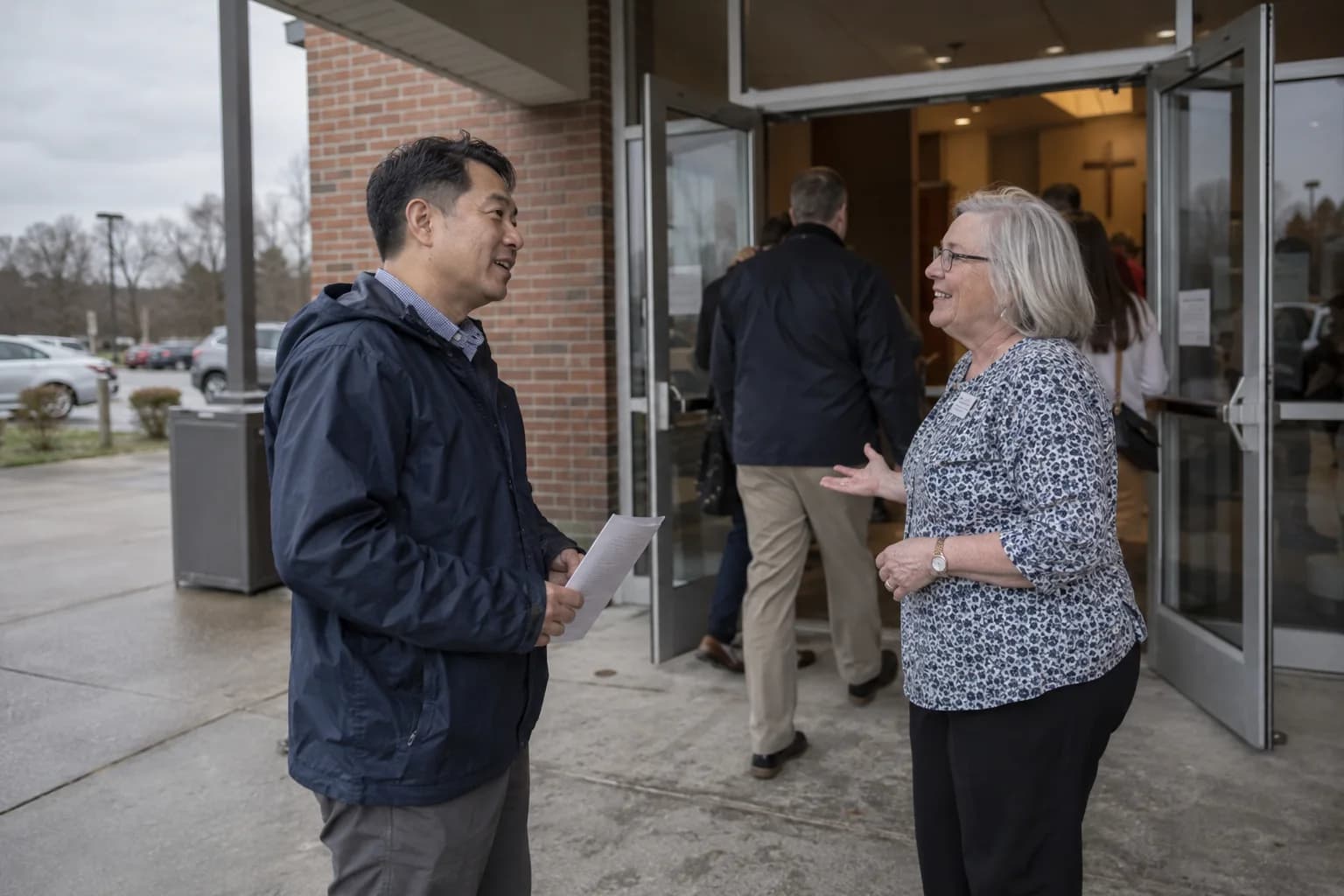
- Arrive a little early and ask an usher how visitors can follow the service.
Make the arrival easier
Check whether the church lists several services with different formats. A quiet early Eucharist, a family gathering, and an evening praise service may feel quite different in the same building. Sunday school or Sabbath School may happen separately from the main service. Confirm which gathering you intend to attend.
On arrival, you can say simply that this is your first visit and ask where to sit. A printed service sheet, prayer book, screen, or friendly neighbor may help you follow along. If standing or kneeling is uncomfortable, remain seated. Ask about seating near an exit or a quieter space if you need it.
Listen for the shape of worship
Many services include music, prayer, Bible readings, and a sermon or homily. Some follow an established liturgy with repeated responses and a church calendar; others use a locally planned sequence. Repetition can help worshippers participate together, while spontaneous prayer offers another form of shared expression. Neither description tells you everything about a church’s beliefs.
Music can range from unaccompanied chant to a choir, organ, small acoustic group, or amplified band. People may sing quietly, raise their hands, kneel, or remain still. Watch and listen before deciding how to participate. A visitor should be able to ask what a gesture means without feeling embarrassed.
Ask about Communion and personal prayer
Communion, also called the Eucharist or the Lord’s Supper, is not governed by one universal visitor policy. Churches differ on baptism, membership, preparation, and shared belief as conditions for receiving. Ask the minister or usher before the service. Remaining in your seat is an appropriate option when you are unsure.
A service may include an invitation to come forward for prayer. Ask what that involves and whether someone will speak with you privately. You can decline a public response or an invitation to share personal details. If there is an offering, ask how visitors usually approach it; you can let a collection pass while you learn about the community.
Let the visit continue at your pace
A conversation after worship can clarify something that was difficult to follow during the service. Ask why a reading was chosen, how often Communion is celebrated, or where a newcomer can learn more. If refreshments are offered, check ingredients and any cost before joining.
One visit gives you a glimpse rather than a complete picture. Notice whether information is clear, questions are welcomed, and practical needs receive attention. If you want to return, confirm the next service’s arrangements rather than assuming a holiday or special event will follow the ordinary weekly schedule.
By denomination
These notes cover the ten traditions in our denomination guide. They combine background with practical questions to ask. A source from one church body does not speak for every church in its wider tradition; confirm local arrangements with your congregation.
Orthodox Christianity
Orthodox Divine Liturgy commonly includes chanted prayer, Scripture, incense, icons, and substantial standing. Many parishes offer a service book or help for visitors. Holy Communion is reserved for Orthodox Christians properly prepared according to church guidance. Ask about the language and local customs; quietly observing is a useful way to begin.
Catholic Christianity
Catholic Mass brings together the Liturgy of the Word and the Liturgy of the Eucharist. Expect readings, a homily, shared prayers, and Communion, with standing, sitting, and kneeling according to the rite and local arrangements. Visitors may attend, but receiving Communion has specific requirements. Ask the parish what to do during its distribution.
Baptist Churches
Baptist worship often includes congregational singing, prayer, Bible reading, and a sermon. The Lord’s Supper may be celebrated weekly or less often, with participation guidance set by the congregation. Some churches invite people forward at the end. Ask what an invitation means; attending does not require making a public response.
Pentecostal Churches
Pentecostal worship may include extended singing, spoken praise, spontaneous prayer, and an invitation for personal prayer. Practices involving spiritual gifts differ by church. The Assemblies of God describes worship within its own doctrinal framework. Ask about service length and the format of prayer ministry, especially if an energetic setting is unfamiliar.
Lutheran Churches
Lutheran services commonly bring together Scripture, preaching, hymns, prayers, and sacramental worship. Some use a formal liturgy and others a contemporary musical setting. Communion policies differ between Lutheran bodies and congregations. Ask the pastor before receiving and request help finding the service order if books or responses are unfamiliar.
Methodist and Wesleyan Churches
Methodist and Wesleyan services often include singing, Scripture, preaching, and prayer, with Communion arrangements shaped by the particular denomination. United Methodist practice should not be assumed for every Wesleyan church. Ask whether the service is traditional or contemporary, how children participate, and what guidance applies when Communion is offered.
Presbyterian and Reformed Churches
Presbyterian and Reformed worship commonly emphasizes Scripture, preaching, prayer, and congregational song. A service may also include confession, an affirmation of faith, baptism, or the Lord’s Supper. Frequency and Communion admission vary. Ask how the congregation’s order of worship expresses its beliefs and whether a printed guide is available.
Anglican and Episcopal Churches
Anglican and Episcopal worship often follows a prayer book or printed liturgy, with readings, responses, a sermon, and prayers. Eucharist is central in many parishes; others offer Morning Prayer at some services. Music and ceremonial customs vary widely. Ask about Communion guidance and follow the service sheet at a comfortable pace.
Seventh-day Adventist Churches
Seventh-day Adventist congregations ordinarily gather for Sabbath worship on Saturday. Sabbath School commonly provides Bible study separately from the main service, which includes music, prayer, and preaching. Communion services include foot washing in Adventist practice. Ask about the schedule and how visitors are welcomed during these observances.
Nondenominational and Independent Churches
Nondenominational and independent worship has no uniform service order. A congregation might offer band-led music and a sermon, a quieter Bible-centered gathering, or charismatic prayer. Check its own visitor information for Communion, children’s groups, and accessibility. Ask whether separate campuses or service times follow different formats.
Prepared by NearMeChurch with AI assistance. Linked church sources explain specific practices; local arrangements can change. Suggest a correction.