
Communion and the Eucharist Across Ten Christian Traditions
A small piece of bread and a cup can carry the weight of an entire Christian story. At the Lord’s Supper, Communion, or Eucharist, Christians remember Jesus’ final meal with his disciples and gather around a practice that has shaped worship for centuries. They share the conviction that the meal matters, but explain its meaning in different ways. Is Christ present in a unique sacramental way? Is the meal chiefly remembrance? How does receiving it shape a person’s life with others? The answers vary, and so do the names, frequency, prayers, and customs.
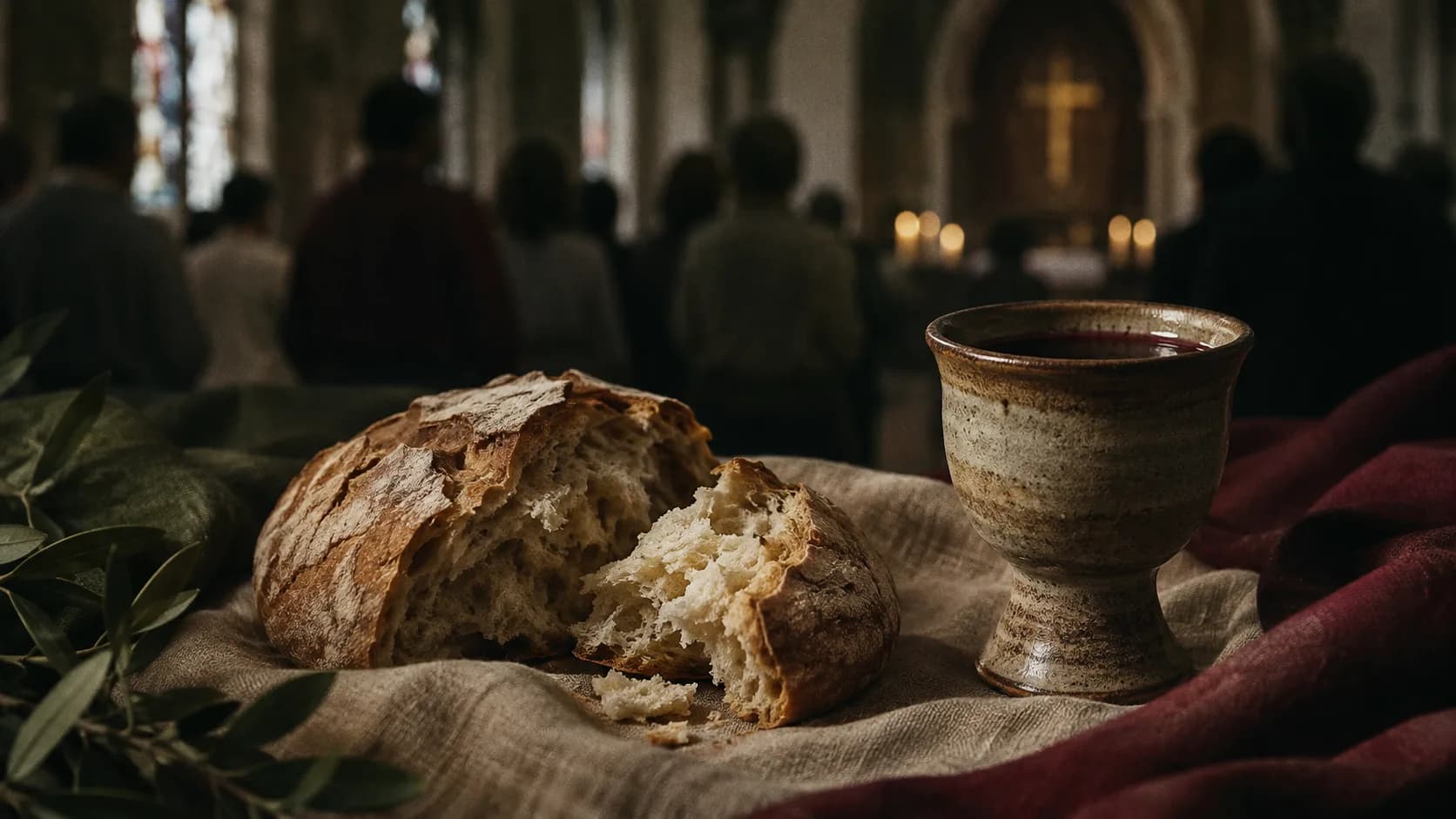
Christian traditions share a meal rooted in Jesus’ Last Supper. They understand Christ’s presence and set participation rules in different ways.
Your quick checklist
- Check when the church celebrates Communion.
- Ask whether visitors may receive and how to take part respectfully.
The meal at the center
The New Testament accounts connect the bread and cup with Jesus’ self-giving and tell the church to remember him. Paul also describes the meal as participation and warns against treating it casually or without regard for others. Churches therefore approach Communion with reverence, but reverence takes different forms: a weekly liturgy, a monthly service, an open table, or a carefully prepared sacrament. Frequency alone does not reveal a community’s full theology.
More than an individual moment
Communion is personal, but it is also shared. The meal connects worshipers to Jesus and to a community that includes people with different stories, needs, and levels of certainty. Some traditions emphasize sacramental presence; others highlight remembrance, proclamation, or spiritual nourishment. Most also ask participants to consider reconciliation, gratitude, and care for neighbors. The meal’s meaning is expressed not only in what a church teaches, but in how it treats people at its table.
If you are visiting
Before receiving Communion at a church you do not know, follow the printed or spoken invitation. Policies differ, and choosing not to receive is a respectful option. You can ask a pastor afterward what the congregation believes and why it practices Communion in this way. A thoughtful answer should make the church’s conviction clear without treating another tradition’s practice as careless or insincere.
By denomination
These notes cover the ten traditions in our denomination guide. They combine background with practical questions to ask. A source from one church body does not speak for every church in its wider tradition; confirm local arrangements with your congregation.
Orthodox Christianity
Orthodox Christians celebrate the Divine Liturgy, in which the Eucharist is central. The liturgy treats the meal as the center of worship and a sign of communion with Christ.
Catholic Christianity
Catholics teach that the Eucharist is truly the Body and Blood of Christ under the appearances of bread and wine, and celebrate it as the source and summit of Christian life. The Mass includes a specific invitation and discipline; visitors should follow local guidance.
Baptist Churches
Many Baptist churches describe the Lord’s Supper as a memorial that proclaims Christ’s death and calls believers to self-examination and unity. Baptist churches may differ on frequency, preparation, and whether the table is open to all believers.
Pentecostal Churches
Pentecostal churches commonly celebrate Communion as remembrance of Jesus’ death and a time for reflection, thanksgiving, and renewed faith. The service often connects remembrance with prayer for God’s help in daily life.
Lutheran Churches
Lutherans confess Christ’s real presence in the Lord’s Supper and understand the bread and wine as joined to Christ’s promise. Communion is received as promise, forgiveness, and support for faith, not a personal achievement.
Methodist and Wesleyan Churches
Methodist and Wesleyan traditions often describe Communion as a means of grace: a way God meets and nourishes people through the shared meal. Many congregations connect the meal with both personal devotion and service to neighbors.
Presbyterian and Reformed Churches
Presbyterian and Reformed churches generally understand Communion as a sacrament in which believers remember Christ and receive spiritual nourishment through the Holy Spirit. Communion is commonly administered with pastoral guidance and shared congregational practice.
Anglican and Episcopal Churches
Anglican and Episcopal churches celebrate the Eucharist as a central act of worship, with liturgy, scripture, prayer, bread, and wine. The liturgy provides the setting, while the exact explanation of Christ’s presence may differ.
Seventh-day Adventist Churches
Seventh-day Adventists observe the Lord’s Supper as a memorial of Christ’s sacrifice and a renewal of faith. The foot-washing service before Communion emphasizes humility and mutual service.
Nondenominational and Independent Churches
Nondenominational churches vary widely. A church’s own invitation is the clearest guide because independent congregations set their practices.
Prepared by NearMeChurch with AI assistance. Linked church sources explain specific practices; local arrangements can change. Suggest a correction.